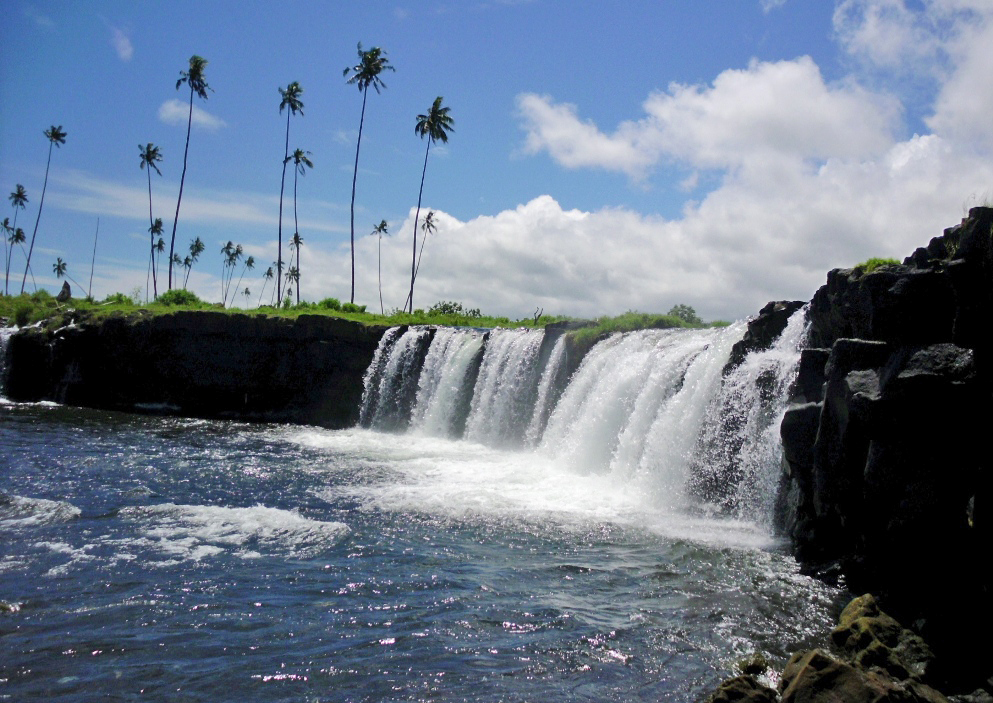
Waterfall · Savaii
Mu Pagoa Falls
Mu Pagoa Falls is a wide cascade where Samoa's largest river meets the Pacific Ocean on Savai'i's south coast. You can view the falls from a bridge above and swim in the small, calm pools below the lower falls. A village fee applies to visit. The site is best seen after rain, when water flow is at its peak.
Wide rope-of-water cascade where Samoa's largest river flows directly into the Pacific on Savai'i's south coast. View from the bridge above; small, calm pools below the lower falls are safe to swim. WST 5 village fee.
Also known as: Mu Pagoa, Mu Pagoa Falls Savai'i, Mu Pagoa Waterfall
Activities that visit Mu Pagoa Falls
1 tour include this stop on their itinerary.

Featured in our guides
Dedicated guide
Visiting Mu Pagoa Falls — full guide
Stays nearby, activities that include Mu Pagoa Falls, practical info — all on one page.
Best stays in Savai'i, Samoa
Savai'i is the second-largest island in Polynesia and Samoa's quiet half — most travellers spend two or three nights here on a Samoa trip. Accommodation is mostly family-run: traditional beach fales along the coast, a handful of mid-range resorts, and a few eco-lodges set back from the road.
Things to do in Samoa: tours, activities, and day trips
Samoa rewards travellers who get out of the resort. Most of the iconic photos (To-Sua, Lalomanu, Alofaaga blowholes, the canopy walk) are 60–90-minute drives from wherever you're staying — and the easiest way to see them is on a guided tour with a local operator who knows the village fees and the best swimming windows.
Best waterfalls in Samoa
Samoa is volcanic, mountainous, and perpetually green — which means waterfalls everywhere. A handful are big, dramatic, and reachable by sealed road; many are off-grid and require a local guide and a small village fee. Below are the ones worth the drive.
Stay nearby on Savaii



Mu Pagoa Falls in detail
- Good to know
- A village fee is payable to visit. Sunday opening is afternoon only; the falls are open all day Monday through Saturday.
- About
- A wide rope-of-water cascade where Samoa's largest river flows directly into the Pacific on Savai'i's south coast. You can view the falls from the bridge above and swim in the small, calm pools below the lower falls.
- Best time to visit
- Best visited after rain, when water flow is strongest.
- Getting there
- Located in Puleia on Savai'i's south coast.
About Mu Pagoa Falls
Is there an entry fee?
Most Samoan waterfalls, natural pools, and caves sit on village or family land and charge a small access fee (typically WST 5-30) paid at the entrance. Bring small notes.
Can I swim here?
Most freshwater pools at the base of waterfalls are swimmable when water levels are reasonable; rope swings or ladders may be present. Swim at your own risk — there are no lifeguards, and rocks can be slippery. After heavy rain, swimming may be unsafe due to debris and stronger currents.
When is the best time to visit?
Morning to early afternoon for the best light and photography. Avoid visits during or just after heavy rain when access tracks can be slippery and pools turbid.
What should I bring?
Reef shoes or sandals with grip, swimwear, towel, drinking water, a small denomination of cash for the entry fee, and insect repellent.
Last updated 3 September 2026