Wildlife · Upolu
Giant Clam Sanctuary
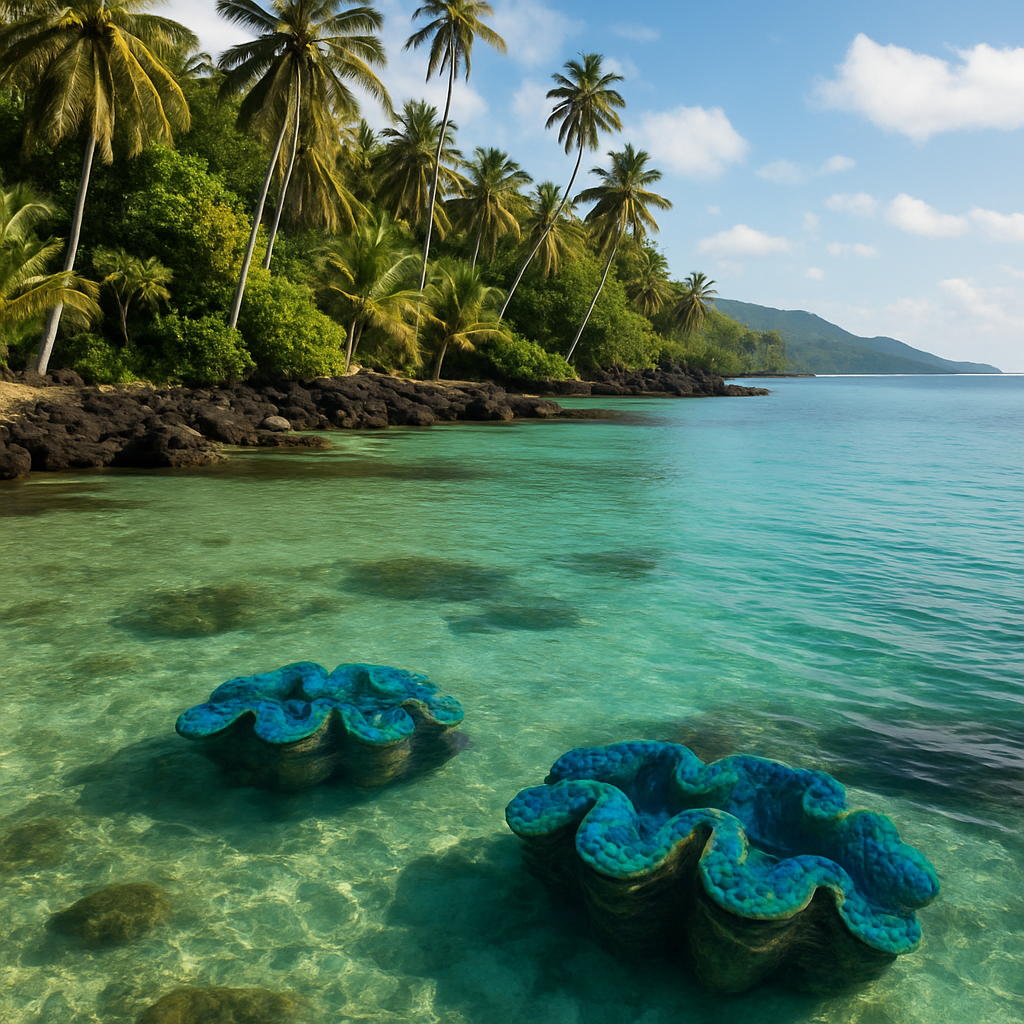
The Giant Clam Sanctuary is a marine reserve at Savaia village on south Upolu, Samoa, protecting hundreds of giant clams in the shallow lagoon. Visitors snorkel to see the clams two to three metres down, where their brilliant blue-and-green mantles open and close. You'll need to pay the village fee and bring your own snorkelling gear. The site is accessible year-round, though calm morning hours at high tide offer the best conditions.
Marine reserve at Savaia village on south Upolu, protecting hundreds of giant clams in the shallow lagoon. Snorkel-only access — the clams sit two-to-three metres down, brilliant blue-and-green mantles cracking open and closed. Pay the village fee, bring your own gear.
Also known as: Giant Clam Reserve Samoa, Savaia, Savaia Giant Clam Sanctuary, Savaia Giant Clams, Savaia Marine Reserve
Activities that visit Giant Clam Sanctuary
1 tour include this stop on their itinerary.

Featured in our guides
Dedicated guide
Visiting Giant Clam Sanctuary — full guide
Stays nearby, activities that include Giant Clam Sanctuary, practical info — all on one page.
Best stays in Upolu, Samoa
Upolu is where most Samoa trips start. Faleolo International Airport, the capital Apia, and the bulk of the country's resort-tier accommodation all sit here. The south coast (Lalomanu, Lotofaga, Siumu) is the postcard side; the north has Apia and the working harbour.
Things to do in Samoa: tours, activities, and day trips
Samoa rewards travellers who get out of the resort. Most of the iconic photos (To-Sua, Lalomanu, Alofaaga blowholes, the canopy walk) are 60–90-minute drives from wherever you're staying — and the easiest way to see them is on a guided tour with a local operator who knows the village fees and the best swimming windows.
Stay nearby on Upolu



Giant Clam Sanctuary in detail
- Good to know
- Bring your own snorkelling gear and pay the village fee to visit.
- About
- A marine reserve at Savaia village on south Upolu protecting hundreds of giant clams in the shallow lagoon. Snorkel to see them two to three metres down, with brilliant blue-and-green mantles opening and closing in the water.
- Best time to visit
- Year-round; calmest in the morning and at high tide.
- Getting there
- Located at Savaia village on the South Coast of Upolu.
- What to expect
- Snorkel-only access to see giant clams in their natural habitat in the shallow lagoon.
About Giant Clam Sanctuary
How do I get here?
Wildlife and island sites typically require either a short boat transfer or a vehicle plus a short walk. For islands, check operator schedules; for wildlife sites, the entry-keeper can usually advise on the easiest access.
Is there an admission fee?
Most sites charge a small access fee (typically WST 5-30) paid on arrival. Boat transfers to islands are separate and arranged with the operator.
When is the best time to visit?
Early morning or late afternoon for active wildlife and softer light. Mid-day heat reduces activity. For island day trips, depart early to maximise time and avoid afternoon weather.
What should I bring?
Comfortable walking shoes, water, sun protection, insect repellent, and a small denomination of cash. Binoculars or a camera with zoom are useful for wildlife sightings.
Last updated 18 September 2026