August 2, 2026 · Commentary on NZ Ministry of Education
Best Time to Visit Samoa Around NZ & Australian School Holidays (2026–27)
Planning a family trip to Samoa around the school calendar? Here is how each NZ and Australian holiday window lines up with Samoa's dry and wet seasons — and which one gives you the best mix of weather, prices and flights.
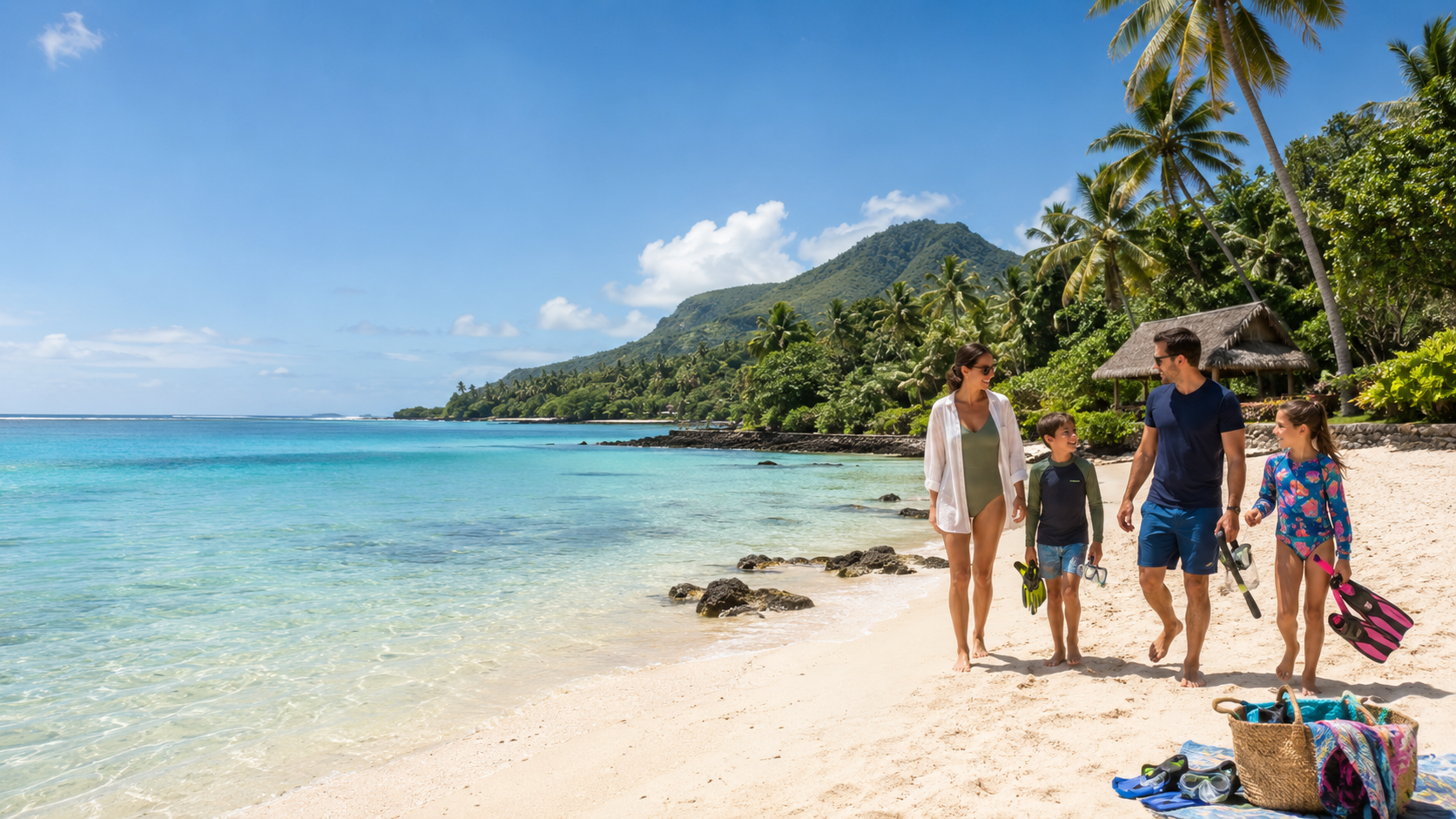
The quick answer. The late September–October spring break is the best all-round family window: it falls in Samoa's dry season and overlaps White Sunday, Samoa's biggest family celebration. The July holidays have the very best weather but book out earliest. December–January works — Christmas in Samoa is genuinely special — but it is wet season, so go in with realistic expectations. April is the value pick.
Samoa's seasons in one paragraph. Samoa is warm all year, sitting around 29°C by day. The dry season runs roughly May to October: lower humidity, more settled weather, calmer seas. The wet season runs November to April: hotter, more humid, with short heavy downpours — and it is also the South Pacific cyclone season, which is worth factoring into December–January plans (and a good reason to have travel insurance). The ocean is swimmable every month of the year.
Spring holidays: late September to mid October 2026. New Zealand's Term 3 break runs 26 September – 11 October 2026; Victorian and Queensland schools break from 19 September, and NSW from 28 September to 9 October. All of it lands inside the dry season. One date to know: White Sunday, the second Sunday of October (11 October in 2026), is Samoa's day for children and one of the biggest family occasions on the calendar — a wonderful thing to be in the islands for, but flights from Auckland fill with families travelling home for it, so book well ahead.
Summer holidays: mid December to late January. This is the big one for family travel and the trickiest for weather. It is peak wet season: expect heat, humidity and tropical downpours between sunny spells, with a background cyclone risk. It is also when airfares peak — Christmas and New Year flights from Auckland, Sydney and Brisbane sell out months out, with diaspora families travelling home. If this is your window, book three to four months ahead and build a couple of flexible days into the itinerary.
April holidays. The New Zealand autumn break (3–19 April in 2026, from 9 April in 2027) and the matching Australian breaks land at the tail end of the wet season. Rain is easing, rivers and waterfalls are running high, and outside the Easter weekend itself this is often the best-value window of the year for both airfares and stays.
July holidays. The 4–19 July 2026 break (similar dates across Australian states) sits in the heart of the dry season — the coolest, least humid stretch of Samoa's year and a proper escape from the southern winter. It is deservedly the most popular window, so it rewards the earliest booking of the four.
Getting there. From Auckland it is about a four-hour flight to Faleolo International Airport, with Air New Zealand and Qantas serving the route. From Sydney and Brisbane, Fiji Airways connects through Nadi, alongside Qantas and Virgin Australia options. Samoa shares the same calendar day as NZ and Australia, and the clocks are kind: the same time as New Zealand during NZ daylight saving, one hour ahead otherwise, and three hours ahead of Australia's east coast.
Prices in your own currency. Every stay, tour and transfer on Kalena can be browsed in NZD or AUD — use the currency switcher and the prices follow you around the site.
Where to start. Once you have a window, the classics are a good spine for a family itinerary: the To Sua Ocean Trench (https://kalena.fun/places/to-sua-ocean-trench), Lalomanu Beach (https://kalena.fun/places/lalomanu-beach) and the Piula Cave Pool (https://kalena.fun/places/piula-cave-pool). Our guides (https://kalena.fun/guides) map out day-by-day plans from there.
School term dates vary slightly by school and state — confirm with your school. Dates above are from the NZ Ministry of Education and state education departments for 2026–27.
Read the original
This is Kalena's commentary. For the full story, head to NZ Ministry of Education.